Methods · Gurugram
Wet Cutting vs Dry Cutting: Choosing the Right Method
A clear comparison of wet and dry diamond cutting methods for concrete, including when each is the right choice for your job.
- Fijer Ali
- 8 February 2026
- Updated 25 February 2026
- 6 min read
Wet cutting uses a continuous water feed to cool the diamond blade or bit and flush debris out of the cut, while dry cutting relies on air-cooling and, where required, a dust extraction attachment. For most concrete cutting jobs above roughly 50 mm diameter or any wall sawing and slab sawing work, wet cutting is the better default because it controls silica dust, extends tool life, and produces a cleaner, cooler cut. Dry cutting still has a place for small, quick jobs or locations where water access or water damage risk rules it out.
Choosing between the two is not just a technical preference, it affects dust exposure, cleanup time, and sometimes even whether the job is allowed in an occupied space. This guide breaks down the real differences so you can ask an informed question when booking a core cutting service, or understand why our crew recommends one method over the other for your specific job.
How each method actually works
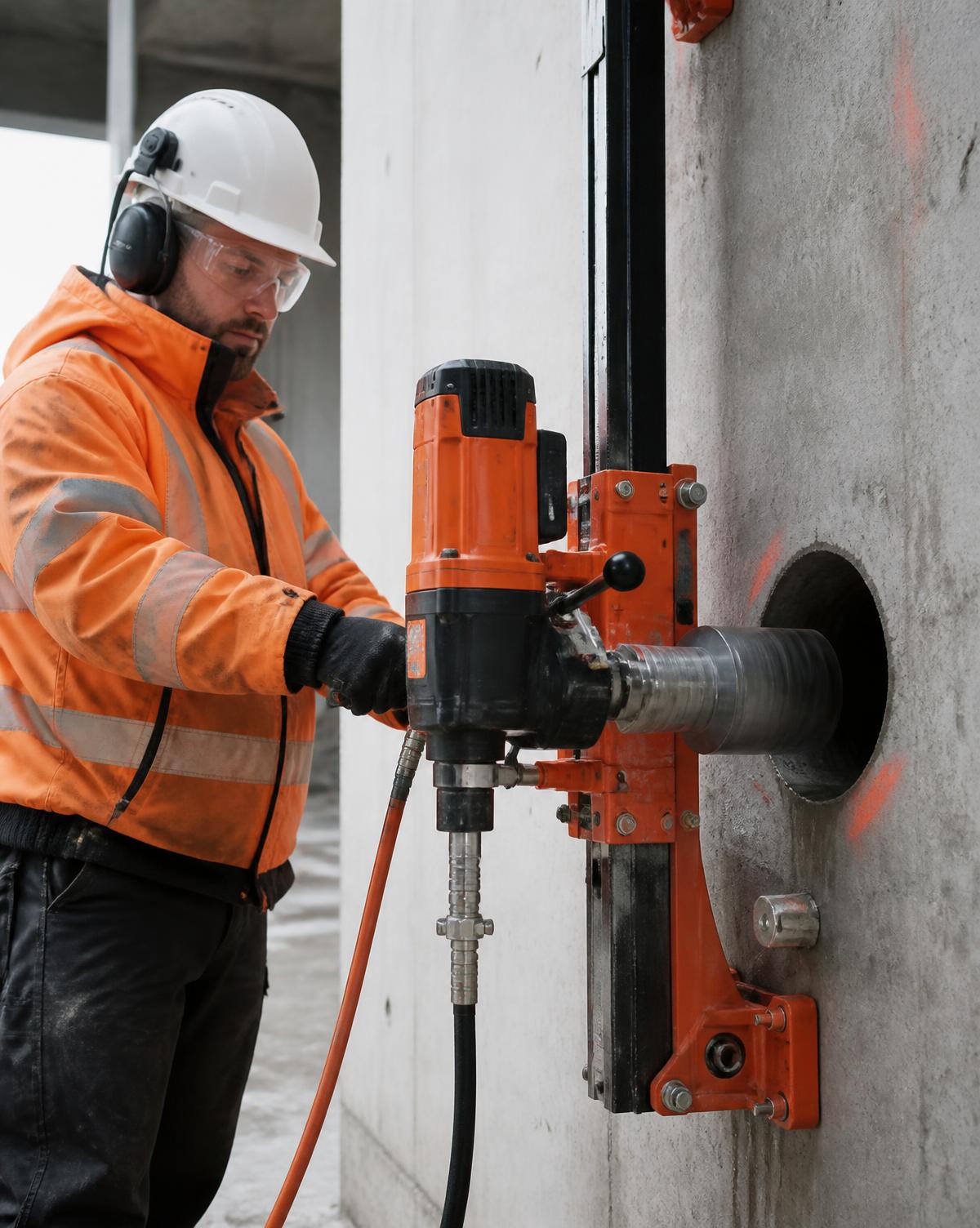
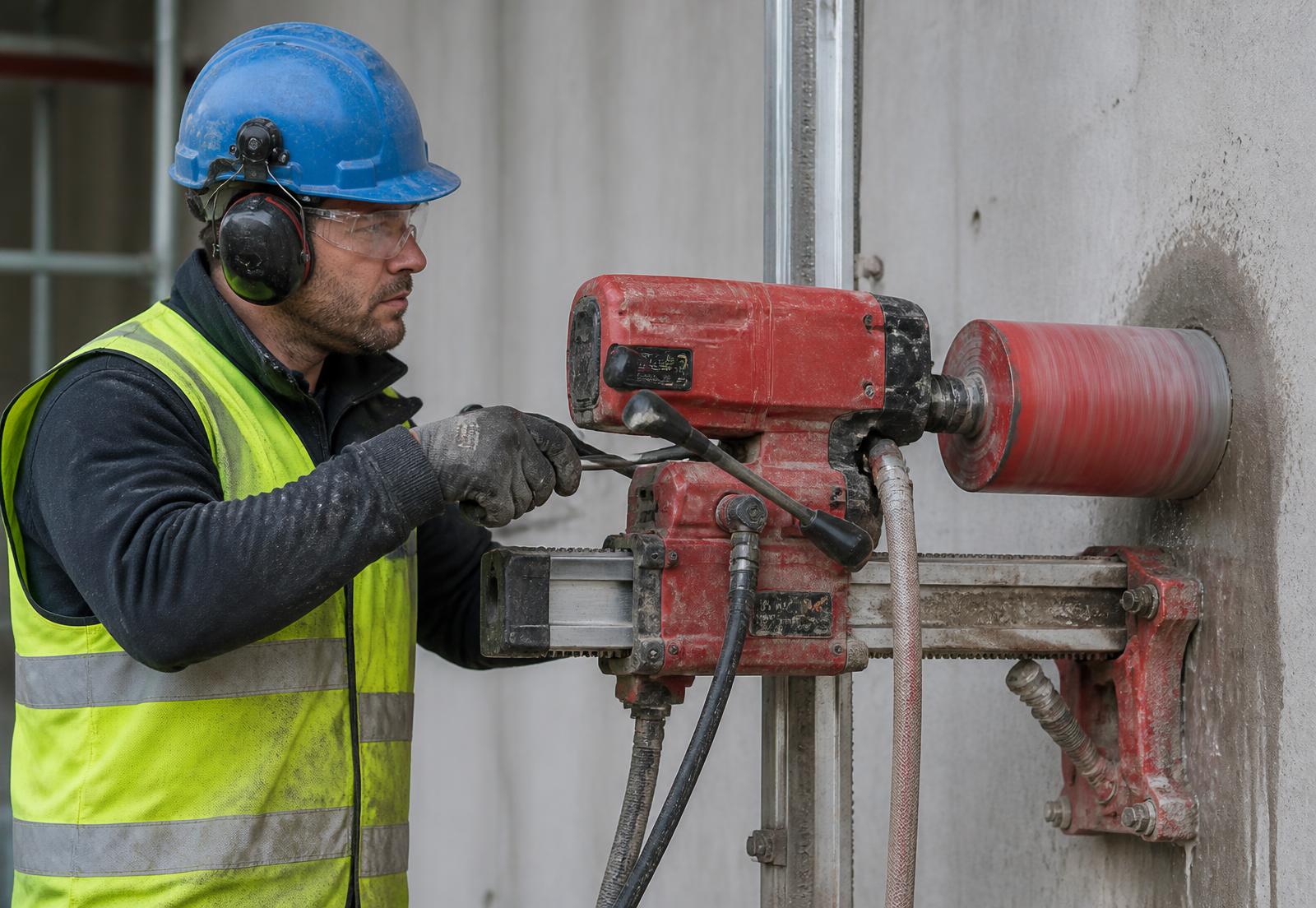
In wet cutting, water is fed either through the centre of a core bit (for drilling) or onto the blade face (for saw cutting), cooling the diamond segments and carrying away the ground concrete as slurry. In dry cutting, the diamond tool relies on air gaps between segments to cool down between passes, and dust is either allowed to settle or captured with a shroud connected to a HEPA-filtered vacuum.
Both methods use similar diamond tooling in terms of segment design, though bonds are sometimes formulated differently for wet versus dry use. Using a wet-rated bit dry for extended periods can overheat the segments and shorten bit life significantly, so the two are not always interchangeable without adjusting technique.
Side-by-side comparison
| Factor | Wet cutting | Dry cutting |
|---|---|---|
| Dust levels | Very low, water suppresses most airborne dust | Higher unless a vacuum shroud is used |
| Cut speed | Generally faster for larger diameters and thicker sections | Slower on thick concrete due to heat build-up limits |
| Tool life | Longer, segments stay cool | Shorter, more frequent overheating risk |
| Mess/cleanup | Slurry needs vacuuming and disposal | Dust needs vacuuming, less liquid mess |
| Best suited for | Holes above 50 mm, wall sawing, slab sawing | Small holes, quick jobs, water-sensitive areas |
| Electrical risk | Requires RCD protection due to water | Lower electrical risk |
When wet cutting is the right call
We default to wet cutting for anything that generates meaningful dust volume or heat, which in practice means most jobs over 50 mm diameter, all wall sawing, and all slab sawing work. It is also the better choice whenever the space is occupied, since the dust suppression matters more to residents than the minor extra cleanup of slurry, which we manage with a wet vacuum. For a deeper look at dust management specifically, see dust-free concrete cutting.
- Structural openings and beam penetrations, where cut quality and edge integrity matter
- Any job in an occupied home, office or hospital where airborne dust is a health concern
- Cutting through reinforced sections, since heat control matters more with embedded rebar, see cutting reinforced concrete and rebar
- Jobs where a clean edge finish is important, for later sealing or waterproofing
When dry cutting makes sense
Dry cutting is practical for small, quick holes such as cable conduits, for locations where water access is genuinely unavailable, such as some terrace or facade jobs, or where water damage risk to finishes below is a bigger concern than dust, such as directly above a sensitive electrical panel or finished ceiling below.
- 1Small diameter holes under 50 mm for cable or conduit routing
- 2Locations without practical water supply access
- 3Emergency or urgent small jobs where setup time for wet cutting is not justified
- 4Areas directly above finished ceilings where water seepage would cause damage
Managing dust when dry cutting is unavoidable
When we must cut dry, we attach a dust extraction shroud connected to an industrial vacuum with a HEPA filter, seal the surrounding area with plastic sheeting, and keep the operator masked with a properly fitted respirator. This does not fully match wet cutting's suppression rate but reduces exposure meaningfully compared to uncontrolled dry cutting.
If a contractor offers to cut dry to save you a bit of cleanup time on anything larger than a cable hole, ask why. Nine times out of ten it is about convenience for the crew, not what is actually best for your home.
Cost and time differences
Wet cutting equipment (pump, hoses, wet vacuum) adds a small amount of setup time, typically 10-15 minutes, but this is usually offset by faster actual cutting speed on larger jobs. Dry cutting with a proper dust shroud takes similar setup time for the extraction system, so in practice the time difference between the two methods, done properly, is smaller than people expect. The bigger cost driver remains wall/slab thickness and reinforcement, not the wet/dry choice itself.
Safety considerations for both methods
Wet cutting requires RCD-protected power and careful cable routing to avoid water contact, covered in our broader concrete cutting safety checklist. Dry cutting requires proper respiratory protection and, ideally, dust extraction rather than relying on masks alone, since prolonged unprotected exposure to concrete dust is a recognised health risk noted by occupational safety bodies and referenced in general terms on the Wikipedia concrete saw overview.
Conclusion
For most jobs, wet cutting is the better default, faster on larger diameters, easier on tools, and far better for dust control. Dry cutting remains a sensible choice for small holes or specific site constraints where water is impractical. Not sure which fits your job? Contact us with the details and we will recommend the right method before we quote, or browse our FAQ page for more on how we approach each job.
Frequently asked questions
- Is dry cutting cheaper than wet cutting?
- For small jobs the cost difference is minimal since setup time is comparable. For larger diameters, wet cutting is often more cost-effective overall because it cuts faster and preserves tool life better.
- Can wet cutting be done in an apartment without water damage risk?
- Yes, with proper containment using plastic sheeting, a catch basin or towel barrier, and a wet vacuum running during the cut, water damage risk is minimal and this is our standard approach for apartment jobs.
- Does wet cutting leave a better finish than dry cutting?
- Generally yes, wet cutting produces a cooler, more consistent cut with less edge chipping, which matters for structural openings or edges that will later be sealed or finished.
- Is dry cutting ever used for slab or wall sawing?
- Rarely for anything beyond a small edge trim, since wall and slab sawing generate significant heat and dust that water cooling manages far more effectively.
- What happens to the slurry water from wet cutting?
- We vacuum it up during the job and dispose of it responsibly, typically into a drain point after settling solids, rather than letting it run freely across floors or into stormwater drains.
- Which method do you recommend for a single small AC pipe hole?
- Either can work depending on access, but we generally still recommend wet cutting where water access is convenient, since it keeps dust to a minimum even for smaller holes.
Next step
Unsure whether your job needs wet or dry cutting?
Describe your job and we will recommend the right method before we quote.
Related guides
Methods
Dust-Free Concrete Cutting: How Wet Cutting Works Indoors
Wet diamond cutting controls silica dust at the blade edge, making it the practical way to cut concrete inside occupied homes and offices.
Safety
Concrete Cutting Safety: The Checklist We Run On Site
A practical, field-tested safety checklist for diamond core cutting and slab sawing jobs, covering PPE, dust, electrical and structural risk.
Methods
Cutting Reinforced Concrete: What Happens at the Rebar
Diamond blades and core bits cut steel rebar the same way they cut concrete, but the presence of reinforcement changes time, tooling and structural risk.