Guides · Gurugram
Core Cutting Services in Gurugram: The Complete 2026 Guide
Everything a homeowner, builder or facility manager needs to know before booking core cutting services in Gurugram.
- Fijer Ali
- 8 January 2026
- Updated 14 February 2026
- 8 min read
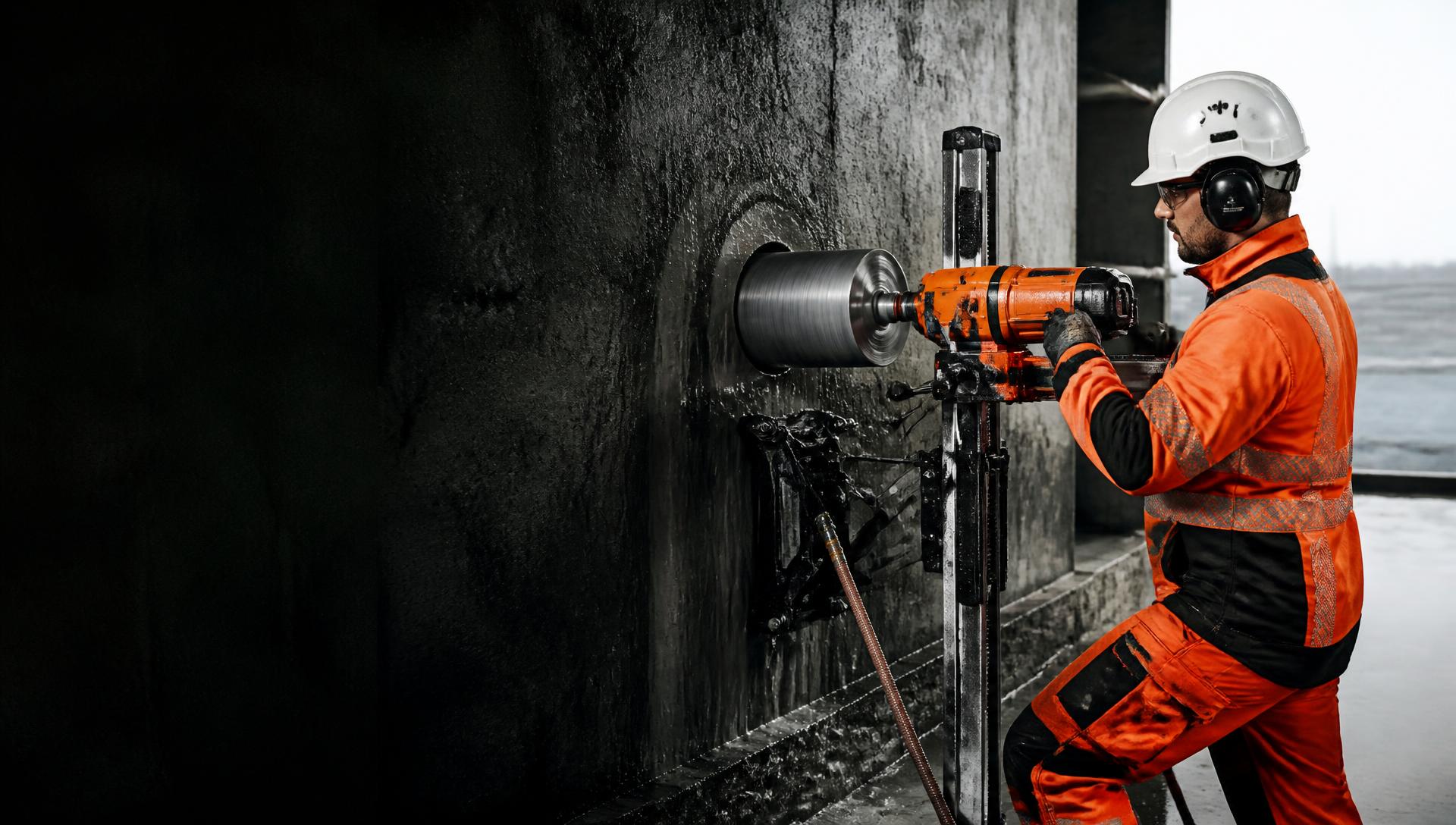
If you are searching for core cutting services in Gurugram, you are most likely trying to get a clean, precise hole through concrete or brick for a pipe, AC line, exhaust duct, electrical conduit or plumbing stack, without cracking the surrounding structure. Core cutting is a diamond drilling technique that uses a hollow, diamond-tipped bit rotating at controlled speed with water cooling to cut a smooth circular hole through reinforced concrete (RCC), brick or stone. Unlike a hammer drill or chisel, it does not vibrate the structure or create hairline cracks, which is why it is the standard method used across residential towers, commercial buildings and industrial plants in and around the city.
In Gurugram specifically, demand for this work comes from a few recurring situations: split AC installation in high-rise apartments (DLF Phases, Sector 56, Golf Course Road), retrofitting plumbing or drainage lines in older independent houses, cutting service openings for fire-fighting and HVAC contractors in commercial towers, and structural openings for lift shafts or staircases in under-construction buildings in Sohna Road and Manesar industrial belts. Because so much of the city's housing stock is RCC-framed with dense rebar, freehand hammering is simply not viable past a certain wall thickness, and it is also disallowed in most society bylaws because of noise and vibration complaints from neighbours.
This guide walks through the core cutting process end to end: what sizes and depths are possible, how pricing is structured, what approvals housing societies expect, safety and dust-control practices, and how to vet a contractor before you let them touch a load-bearing wall. For a narrower look at pricing mechanics, see our dedicated post on core cutting cost, and if you are specifically drilling for an air conditioner, our AC hole drilling guide covers slope and position in detail.
What core cutting actually involves
A core cutting rig consists of a diamond core bit (a steel tube with a diamond-impregnated cutting edge), a motor unit, and a rig or stand that keeps the bit perfectly perpendicular to the surface. Water is fed through the bit continuously to cool the diamond segments and flush out the slurry of ground concrete, which is what keeps the process dust-free when done properly with a vacuum slurry collector. The bit is advanced slowly through the material; a typical 100mm hole through a 230mm brick wall takes 8 to 15 minutes, while a 150mm hole through 200mm RCC with rebar can take 25 to 40 minutes because the bit has to grind through steel as well as concrete.
Where hitting rebar is expected (which is almost always the case in load-bearing walls and slabs), the crew should first scan the area with a rebar detector to avoid cutting through main structural bars, and only proceed once the position is confirmed as safe. We cover this in more depth in our post on cutting reinforced concrete with rebar inside.
Common applications across Gurugram properties
- Split AC pipe and drain holes, typically 45mm to 60mm diameter, sloped outward
- Plumbing and drainage stack openings, 100mm to 200mm diameter
- Exhaust and kitchen chimney ducting, 150mm to 250mm diameter
- Electrical conduit and cable tray openings in commercial fit-outs
- Fire sprinkler and HVAC riser penetrations in office towers on Golf Course Road
- Structural openings for new staircases, lift shafts or floor slabs in under-construction buildings
- Manhole and drainage chamber cutting in society common areas near Sohna Road
Core sizes and what they are used for
| Diameter | Typical use | Common wall/slab thickness |
|---|---|---|
| 38mm-50mm | AC drain, small conduit | 115mm-230mm brick |
| 45mm-60mm | AC refrigerant piping (standard split AC) | 150mm-230mm |
| 100mm | Plumbing waste line, exhaust fan duct | 115mm-230mm |
| 150mm | Soil pipe, kitchen chimney duct | 150mm-250mm RCC |
| 200mm-300mm | Large drainage, HVAC riser | 200mm-300mm RCC |
| 350mm+ | Structural openings, staircase/lift core | as per structural drawing |
For a fuller breakdown of every standard bit size and what fits which job, our diamond core bit sizes chart is a useful reference to keep on hand before you finalise a quote.
Society approvals and building rules in Gurugram
Most gated societies in DLF Phases, Sector 56 and along Golf Course Road require a written no-objection or work permission slip from the RWA or facility management office before any core cutting is carried out, mainly because the work generates noise and the movement of equipment through common lifts and corridors needs scheduling. It is worth checking your society's specific timing restrictions; many restrict cutting work to 10am-6pm on weekdays and disallow it entirely on Sundays. Commercial towers typically route this through the building's facility team and may ask for a structural NOC if the opening is anywhere near a beam, column or shear wall.
- 1Confirm the exact location against the structural drawing, if available, to rule out beams and columns
- 2Get society/facility written permission before scheduling the crew
- 3Inform adjoining flat owners if cutting a shared wall or slab, especially for AC or plumbing lines
- 4Arrange lift/goods entry passes in advance for equipment movement
- 5Schedule during permitted working hours to avoid disputes
Dust, noise and site protection
A professional crew uses wet cutting with a vacuum slurry collector so there is no airborne dust, and lays drop sheets to protect flooring and furniture. Noise cannot be eliminated but a well-maintained rig running at correct RPM is noticeably quieter than a hammer drill trying to punch through the same wall. If dust control is a specific concern for your home, our dust-free concrete cutting post explains exactly what equipment and technique combination achieves this, and our guide to preparing your home before the crew arrives is worth reading a day in advance.
How pricing generally works
Core cutting is usually quoted per hole based on diameter and material thickness, with a minimum callout charge to cover travel and setup, especially for one-off jobs far from central Gurugram such as Manesar or Ramgarh. As a rough, indicative range subject to a site-specific quote: small AC holes typically fall in the ₹800-₹1,800 per hole range, while structural openings above 200mm diameter through thick RCC can run into several thousand rupees per hole depending on rebar density and access difficulty. The full mechanics of this pricing, including what pushes cost up or down, are explained in our core cutting cost guide.
The biggest cost surprises on core cutting jobs almost always come from access, not the hole itself, scaffolding, ladder work above the second floor, or a crew having to carry a rig up eight flights when the lift is out of service.
Choosing a contractor you can trust with a load-bearing wall
Ask any contractor how they check for rebar before cutting, whether they carry their own vacuum dust extraction, and whether they will give a written quote broken down by hole size before starting. A contractor unwilling to confirm these basics is a red flag on any job involving structural walls. We have written a longer checklist in how to choose a core cutting contractor that is worth reading regardless of who you eventually hire.
Where we work
Our crew regularly services Sector 56, DLF Phase 1 through 5, Sohna Road, Golf Course Road, Manesar and Ramgarh, covering residential towers, independent floors, offices and factory units. See our full service areas coverage or check our services page for the complete list of what we cut and drill.
Getting a reliable quote
The fastest way to get an accurate number is to share photos of the wall or slab, its approximate thickness, the number and size of holes needed, and floor/access details over WhatsApp. We generally respond with an indicative quote within the hour and can schedule same-day or next-day visits across most of Gurugram. You can also browse our recent projects or read more on our about page to understand how we operate before reaching out via contact.
Final word and next step
Core cutting looks simple from the outside, a hole through a wall, but the difference between a clean job and a cracked, leaking or structurally risky one comes down to equipment, rebar awareness and experience reading the building. Whether it is a single AC hole in Sector 56 or a set of structural openings on a Sohna Road commercial site, get a contractor who will scan before cutting, quote in writing, and clean up after. Call +91 9735 156 388 or message us on WhatsApp for a same-day quote, or use our contact page to send photos of your site.
Frequently asked questions
- Is core cutting safe for load-bearing walls?
- Yes, when the location is checked against the structural layout and scanned for rebar first. Cutting through a main structural column or transfer beam without checking can be unsafe, so always ask the crew to scan before drilling near columns or shear walls.
- How long does a typical core cutting job take?
- A single AC hole through a brick wall takes 10-15 minutes; a 150mm hole through RCC with rebar can take 30-45 minutes. Multiple holes on one site, including setup and cleanup, are often finished within half a day.
- Do I need society permission for core cutting in Gurugram?
- Most gated societies require a written NOC or work permission slip from the RWA or facility office, mainly for noise scheduling and equipment movement through common areas. Always check your specific society's rules before booking a crew.
- Can core cutting be done without making a mess?
- Yes, with wet cutting and a vacuum slurry collector the process produces almost no airborne dust, though some water and slurry at the cutting point is normal and gets cleared up by the crew afterward.
- What is the difference between core cutting and wall sawing?
- Core cutting produces round holes using a rotating diamond bit, typically for pipes and ducts. Wall sawing uses a flat diamond blade to cut straight lines, used for doorways, windows or slab sections.
- Can you cut through a granite or marble slab too?
- Yes, diamond core bits work on stone as well as concrete and brick, though speed and pressure need to be adjusted to avoid chipping the surface finish.
Next step
Need core cutting done right the first time?
Get a same-day, no-obligation quote for your Gurugram property.
Related guides
Pricing
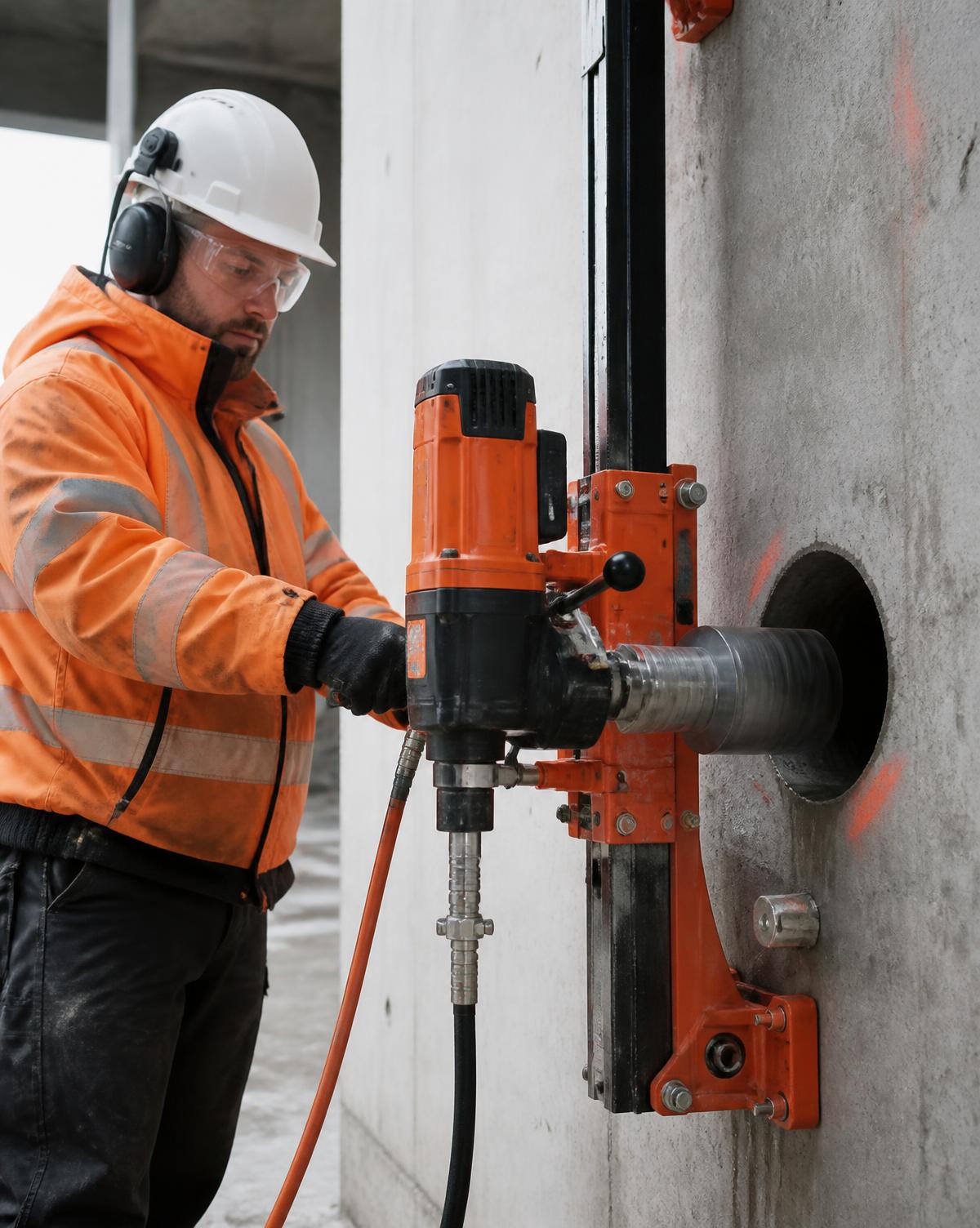
Core Cutting Cost in Gurugram: What Drives the Price
A transparent look at how core cutting cost is calculated in Gurugram, and what pushes the price up or down.
Guides
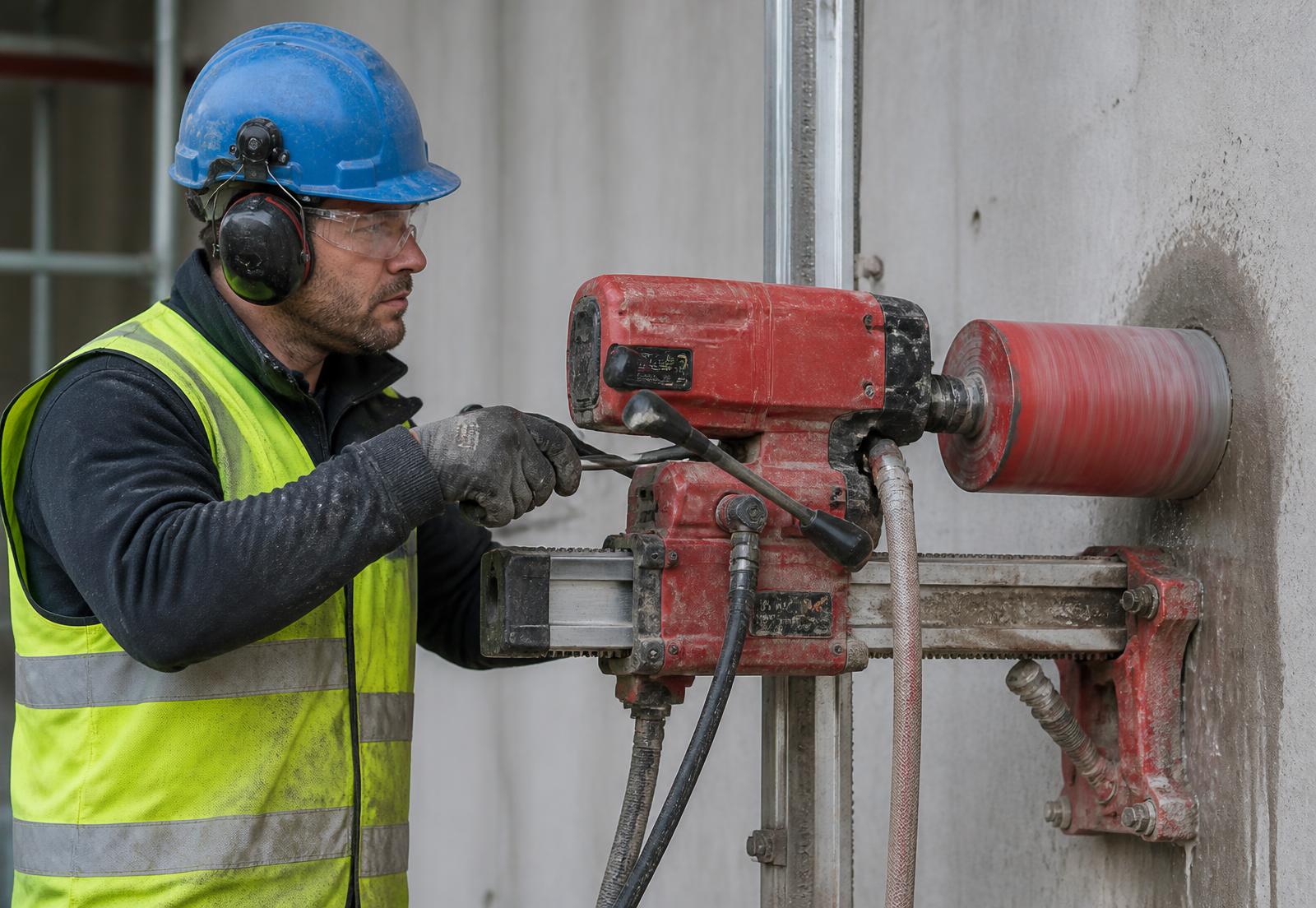
AC Hole Drilling: Correct Size, Slope and Position
A practical guide to getting AC hole drilling right the first time, from sizing to slope to avoiding rebar.

Guides
How to Choose a Core Cutting Contractor in Gurugram
Choosing a core cutting contractor comes down to verifiable equipment, a clear written quote, and evidence of safe practice on real sites, not just a low price.