
Guides · Gurugram
AC Hole Drilling: Correct Size, Slope and Position
A practical guide to getting AC hole drilling right the first time, from sizing to slope to avoiding rebar.
- Core Cutting Crew
- 15 January 2026
- Updated 18 February 2026
- 6 min read
The correct AC hole drilling size for a standard split AC in India is 45mm to 60mm diameter, drilled with a slight outward slope of roughly 5 to 10 degrees from indoor to outdoor side, so that any condensation naturally drains outward instead of pooling inside the wall or dripping down your interior wall. Getting the diameter right matters because too small a hole means the installer struggles to route the copper piping, drain hose and interconnecting cable together without kinking them, while too large a hole leaves gaps that let in rain, insects and draughts unless properly sealed afterward.
Position matters just as much as size. The hole needs to sit close enough to the indoor unit's piping outlet to avoid excessive bends, but far enough from the outdoor unit's final mounting bracket position that the pipe run stays short and clean. Getting this wrong is one of the most common reasons AC installations look messy or develop drainage issues within the first monsoon season. This guide is meant to be read alongside our broader core cutting services guide if you are also dealing with other wall penetrations on the same site.
Below we cover sizing by AC tonnage, the slope logic in detail, where to avoid drilling because of rebar and plumbing, and what a clean finished job should look like when the crew leaves.
Hole size by AC capacity
| AC capacity | Typical pipe hole diameter | Notes |
|---|---|---|
| 1 Ton split AC | 45mm-50mm | Standard for most residential bedrooms |
| 1.5 Ton split AC | 50mm-55mm | Most common size across Gurugram apartments |
| 2 Ton split AC | 55mm-60mm | Larger living rooms, needs bigger pipe bundle |
| Cassette/ducted units | 60mm-100mm | Depends on ducting and multiple pipe runs |
| VRV/VRF commercial units | As per manufacturer spec | Always follow the HVAC contractor's drawing |
Why the outward slope matters
A hole drilled dead level, or worse, sloping slightly inward, is one of the most common causes of water staining below AC installations. Even though the copper pipe is insulated, condensation can form on the insulation over time, and if the hole through the wall slopes even marginally toward the room, that moisture tracks back indoors along the pipe and drips onto the wall or floor. A 5 to 10 degree outward slope ensures gravity does the work for you. This is a small detail that costs nothing extra to get right at drilling time but is expensive and messy to fix later once tiles, paint or false ceiling are in place.
Choosing the exact spot
- Keep the hole within reasonable pipe-run distance of the indoor unit's flare outlet, ideally under 3 metres of pipe run for cleanest results
- Avoid drilling directly above window or door lintels where rebar concentration is highest
- Check the outdoor side for existing pipework, cable trays or a neighbour's exhaust duct before finalising position
- For upper floors, confirm the outdoor unit bracket location first so the pipe run does not need an awkward detour
- Avoid areas directly below bathroom or kitchen plumbing risers to reduce risk of hitting a hidden pipe
Rebar and plumbing checks before drilling
Exterior walls in Gurugram apartments are usually RCC, meaning there is reinforcement steel inside that a rebar scanner can detect before drilling begins. A careful crew scans the intended spot, and if a bar is found dead centre, shifts the hole by a few centimetres rather than cutting through primary reinforcement. This is covered in more technical detail in our post on cutting reinforced concrete with rebar inside, which is useful reading if you want to understand why your installer might ask to move the position slightly from where you initially marked it.
It is also worth checking whether the wall carries any concealed plumbing or electrical conduit, particularly in older independent houses in areas like Sohna Road where as-built drawings may not exist. When in doubt, a quick visual check with a torch from both sides of the wall and a metal/live-wire detector avoids expensive mistakes.
Sealing the hole after installation
Once the copper piping, drain hose and cable are routed through, the gap around them should be sealed with PU foam or a cement-based sealant, not left open, and finished with a UV-resistant PVC or aluminium pipe cover on the outdoor face for a clean appearance and long-term weatherproofing. A properly sealed hole also stops rainwater ingress during monsoon and prevents birds or rodents from nesting inside wall cavities.
- 1Drill the hole at the correct diameter and outward slope
- 2Route pipe, drain hose and cable together through in one pass
- 3Seal the gap with PU foam or cement mortar on both faces
- 4Fit a weatherproof pipe cover on the outdoor side
- 5Test run the unit and check for any drip at the wall face
Common mistakes we see on inspection
The most frequent issues we get called to fix are holes drilled level or sloping inward, holes drilled too small so installers force the pipe bundle through and crush the insulation, and holes left unsealed for months leading to water ingress and even minor efflorescence on the interior wall. Another avoidable issue is drilling directly through a beam or column purely because it looked like the shortest pipe route, when shifting the hole by half a metre would have avoided structural steel entirely.
A five-minute check with a rebar scanner and a spirit level before drilling saves far more time than the patch-up work needed after a hole is cut in the wrong place or at the wrong angle.
Cost of AC hole drilling in Gurugram
As an indicative range, a single AC hole with standard diameter and depth typically falls between ₹800 and ₹1,800 depending on wall thickness, floor level and access, always confirm with a specific quote for your site. If you are drilling multiple holes for a whole apartment during an AC installation drive, most contractors offer a better per-hole rate. See our core cutting cost guide for the full breakdown of what affects pricing across all hole types, not just AC.
When to call a professional versus doing it yourself
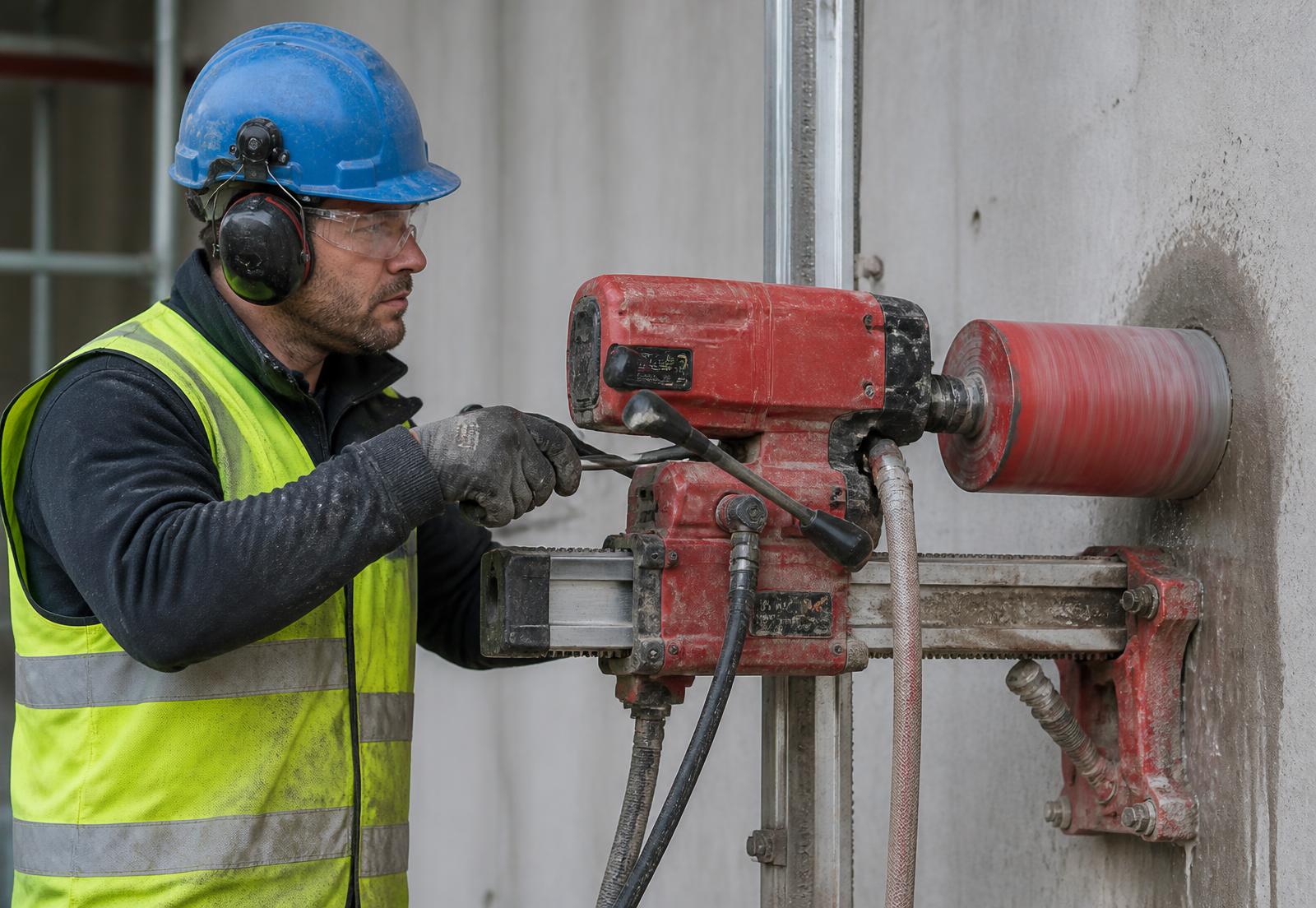
Many AC technicians carry a basic rotary hammer with a masonry core bit, which works reasonably on plain brick walls but struggles and can crack tiles or plaster on RCC walls with rebar. For any exterior RCC wall, especially above the ground floor, we recommend using a dedicated diamond core drilling service rather than a general AC technician's hammer drill, purely because the finish quality and structural safety margin are significantly better.
Book a clean, correctly sloped AC hole
If you are installing a new split AC anywhere in Gurugram, from Sector 56 to Golf Course Road or Manesar, our crew carries rebar scanners and dust-free diamond drilling equipment to get the size, slope and position right in one visit. Message us on WhatsApp with a photo of the wall and your AC tonnage for a quick quote, or explore our services and projects pages for more detail.
Frequently asked questions
- What size hole is needed for a 1.5 ton split AC?
- Typically 50mm to 55mm diameter is enough to route the copper piping, drain hose and interconnecting cable comfortably without crushing the pipe insulation.
- Why does the AC hole need to slope outward?
- An outward slope of about 5 to 10 degrees lets condensation on the pipe insulation drain outside by gravity instead of tracking back indoors and staining your wall.
- Can AC hole drilling damage the building structure?
- Not if done correctly with a diamond core bit and prior rebar scanning. Problems only arise when someone drills through a column, main beam or major reinforcement bar without checking first.
- How much does AC hole drilling cost in Gurugram?
- As an indicative range, expect roughly ₹800-₹1,800 per hole depending on wall thickness and floor access, confirm exact pricing with a site-specific quote.
- Should the hole be sealed after AC installation?
- Yes, always. Use PU foam or cement mortar around the pipe and cable, then fit a weatherproof pipe cover outside to prevent water ingress and pest entry.
- Can the same hole be reused if I change my AC unit later?
- Usually yes, provided the new unit's pipe and cable diameter is similar. A technician will simply re-seal around the new pipe bundle after removing the old one.
Next step
Book professional AC hole drilling
Correct size, correct slope, done with dust-free diamond drilling.
Related guides
Guides
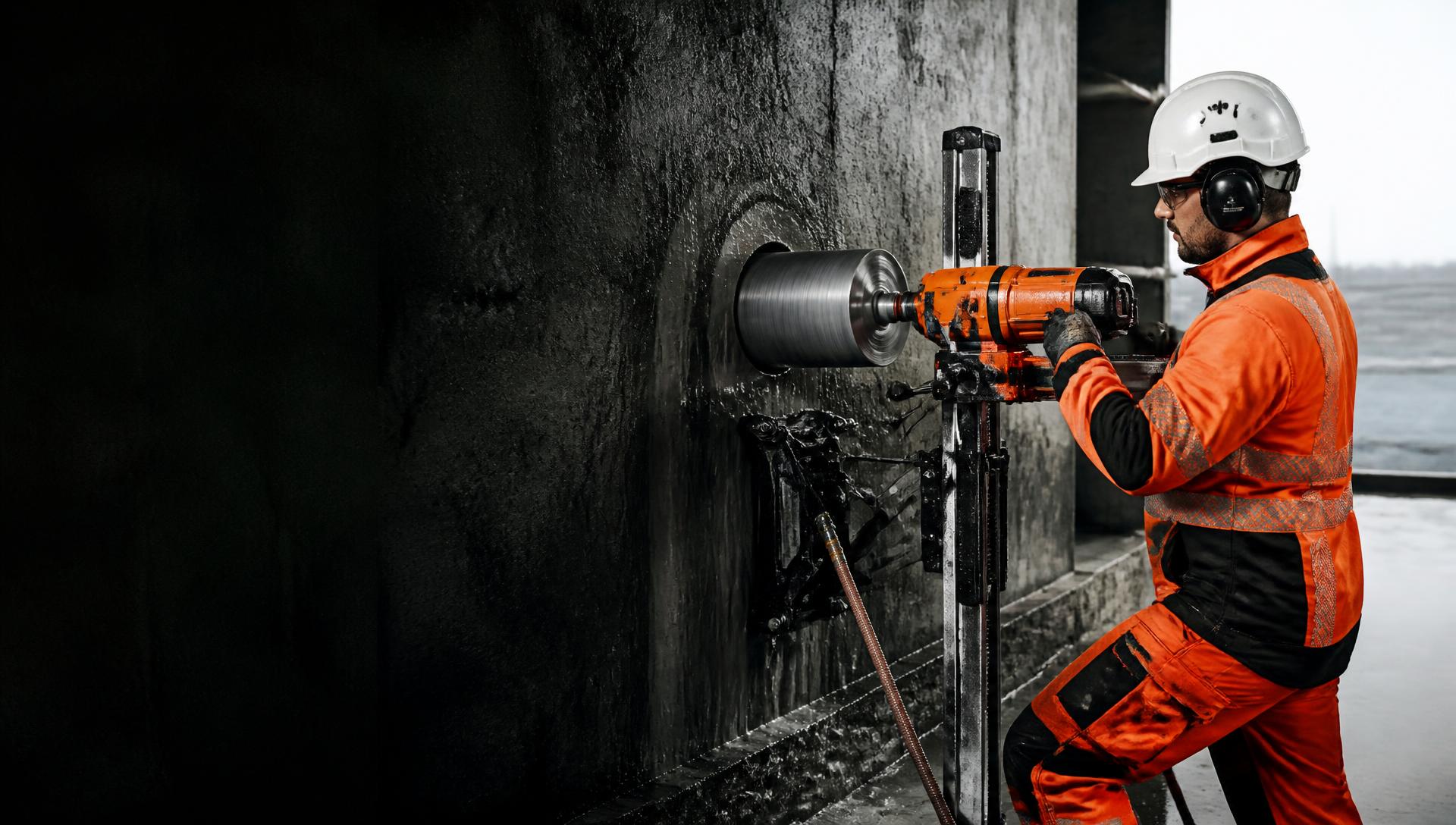
Core Cutting Services in Gurugram: The Complete 2026 Guide
Everything a homeowner, builder or facility manager needs to know before booking core cutting services in Gurugram.
Pricing
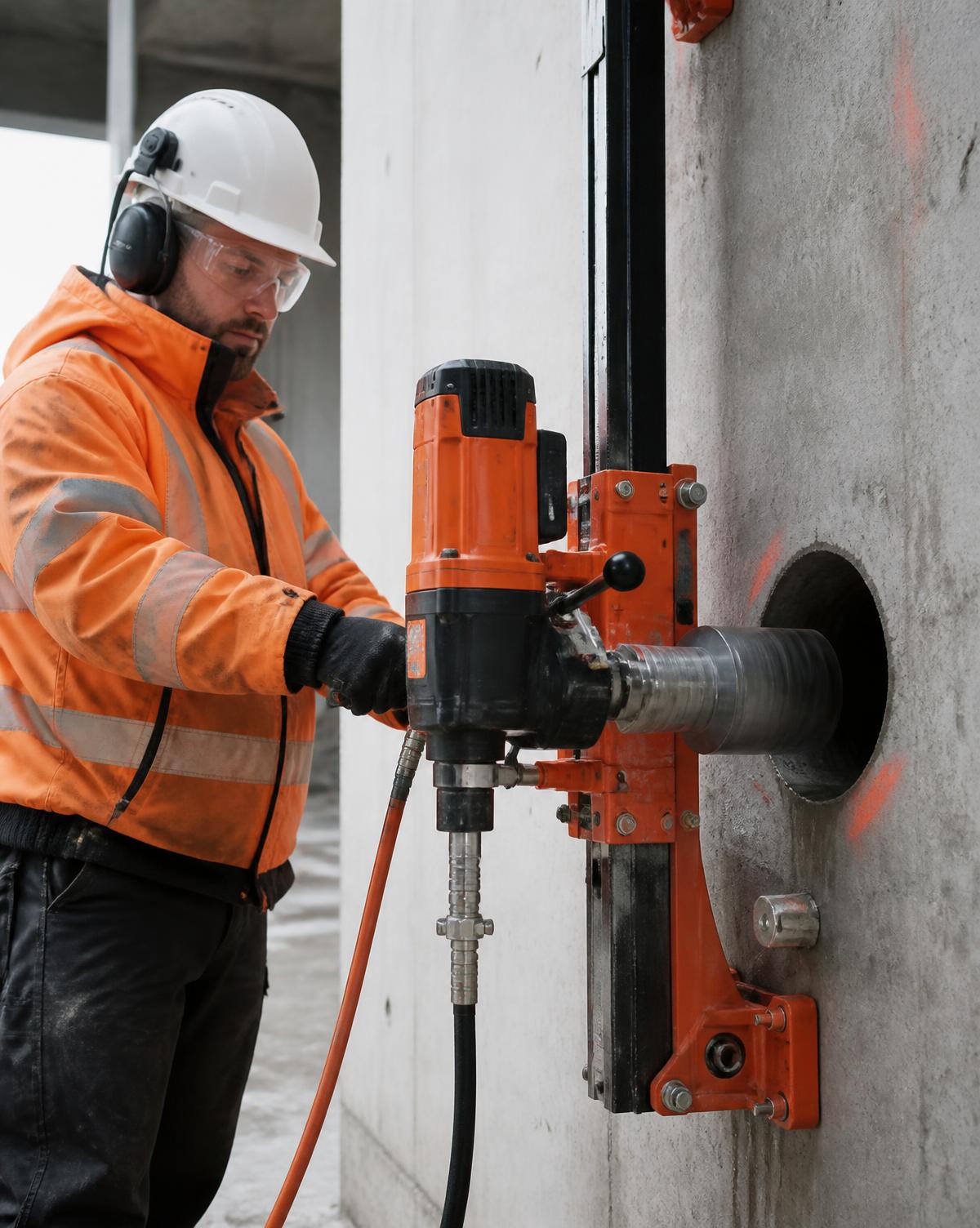
Core Cutting Cost in Gurugram: What Drives the Price
A transparent look at how core cutting cost is calculated in Gurugram, and what pushes the price up or down.
Methods
Cutting Reinforced Concrete: What Happens at the Rebar
Diamond blades and core bits cut steel rebar the same way they cut concrete, but the presence of reinforcement changes time, tooling and structural risk.